
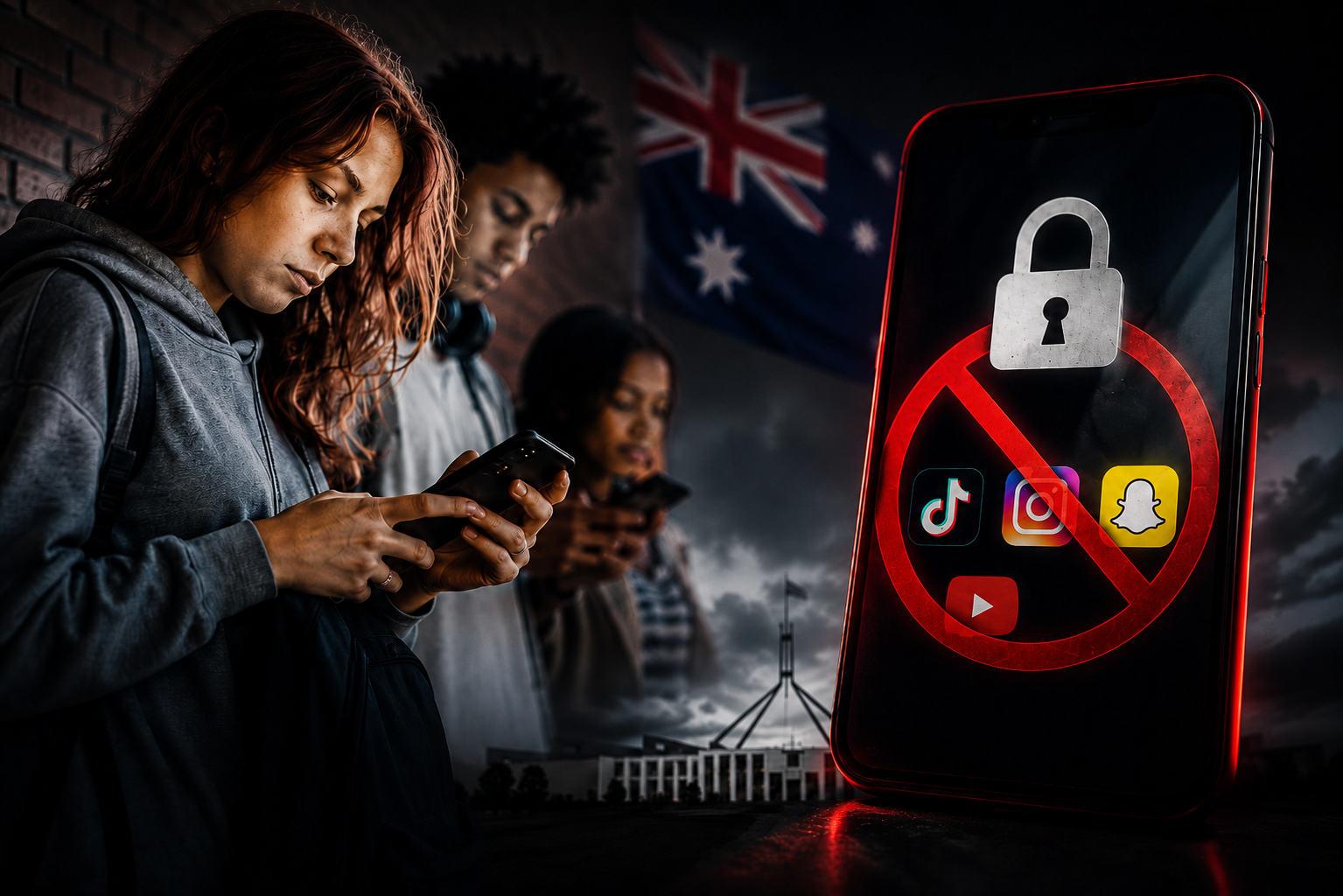
Australia’s social media ban for under-16s is no longer just a child safety debate. It is turning into one of the clearest tests of how far governments are willing to go against Big Tech.
The rule is simple on paper: major age-restricted social media platforms must take reasonable steps to stop Australians under 16 from creating or keeping accounts. The pressure is not supposed to fall on children or parents. It falls on the platforms.
But the fight is getting bigger because Australia is now moving to make the penalties heavier. Reuters reported that the maximum penalty for systematic failures could jump from A$49.5 million to A$99 million, turning the ban into a much more serious risk for platforms that fail to comply.
That is why the story is bigger than Australia. This is about TikTok, Instagram, Snapchat, YouTube, X and other platforms being pushed into a new era where governments are no longer just asking for better safety tools — they are threatening massive fines if companies do not keep young users away.
For more stories about platform drama, online debates, and digital culture, follow the Internet Culture hub and the latest Viral News coverage.
What Australia is trying to do
Australia’s social media age restrictions are designed to stop under-16s from having accounts on major social platforms. The goal is not to punish young users. The goal is to force the companies behind these apps to build stronger systems.
That detail matters. A teen is not meant to be fined for getting access. Parents are not meant to be fined either. The legal pressure is aimed at the companies running the platforms.
Supporters argue that this is the only way to make Big Tech take youth safety seriously. They say platforms have had years to deal with addictive design, harmful recommendations, bullying, stranger contact, and content that can affect young users’ mental health.
Critics argue that an age ban alone does not solve the real problem. They say teens will find workarounds, while the deeper issues — algorithms, privacy, platform design, and harmful content — still need stronger regulation.
The problem: teens are still getting in
The biggest challenge is enforcement.
A government can announce a ban, but the internet does not always behave like a locked door. Teenagers already understand workarounds. Platforms also do not all verify age the same way.
Some checks may be as basic as asking for a birth date. Others may involve selfies or ID-style systems, which then creates another concern: privacy. If the solution to protecting children online is collecting more personal data, people will ask who stores it, how it is used, and what happens if it leaks.
So Australia is stuck in the middle of a hard question: how do you keep under-16s away from harmful social media without building a surveillance-style internet?
For more tech policy, platform changes, and digital safety stories, check the AI & Tech section.
Why Big Tech is under pressure
The proposed A$99 million penalty is the headline number because it changes the tone of the debate.
For years, tech platforms have been accused of moving slowly on youth safety unless there is legal or financial pressure. Australia is trying to flip that. Instead of asking platforms to promise better safety, the government wants stronger proof that they are actually preventing underage accounts.
That could mean tougher age assurance systems, clearer reporting to regulators, better compliance evidence, and more accountability when platforms fail.
This is also why other countries are watching. If Australia’s approach works, it could become a model. If it fails, critics will use it as proof that social media age bans sound strong but are hard to enforce in real life.
Either way, the debate is moving fast. What started as a child safety law is turning into a global argument about who controls the social internet: governments, platforms, parents, or users.
The real debate
The viral version of this story is easy: “under 16, locked out.”
But the real debate is more complicated.
Parents worried about their kids may support the ban because they see social media as too powerful, too addictive, and too hard to manage at home. Many believe platforms have designed feeds to keep young users scrolling, even when the experience becomes negative.
Teens and digital rights critics may see it differently. They may argue that social media is also where young people talk to friends, follow creators, join communities, learn news, and express themselves. Locking them out could remove support networks as well as harmful content.
Then there is the practical issue: if under-16s can still bypass the system, does the ban actually protect them, or does it just push them into less visible online behavior?
That is the core question Australia is now facing.
The country is trying to build one of the toughest youth social media systems in the world. But the next stage will decide whether this becomes a serious Big Tech crackdown or just another rule that teens learn how to dodge.
For now, one thing is clear: the social media age debate is no longer a small policy story. It is a global culture story, and Australia is at the center of it.
Follow more fast-moving digital stories through Viral News, Internet Culture, and AI & Tech.


