
Match facts
- Match: Argentina vs. England - Competition: 2026 FIFA World Cup - Round: Semi-final - Date: Wednesday, July 15, 2026 - Venue: Atlanta Stadium - City: Atlanta, Georgia - Argentina quarter-final: Beat Switzerland 3–1 after extra time - England quarter-final: Beat Norway 2–1 after extra time - Key storyline: Lionel Messi’s first senior international match against England - What is at stake: A place in the World Cup final
The opponent missing from Messi’s career
Messi has played against Brazil, Uruguay, Germany, Italy, Spain, France and almost every other major football nation during his international career.
England remained the unusual exception.
The countries last met in November 2005, when England won a friendly 3–2 in Geneva. Messi did not play. He was serving a suspension following the red card he received seconds after coming on during his Argentina debut against Hungary earlier that year.
Argentina and England then avoided each other through five World Cups, years of qualification schedules and a limited number of international friendly windows.
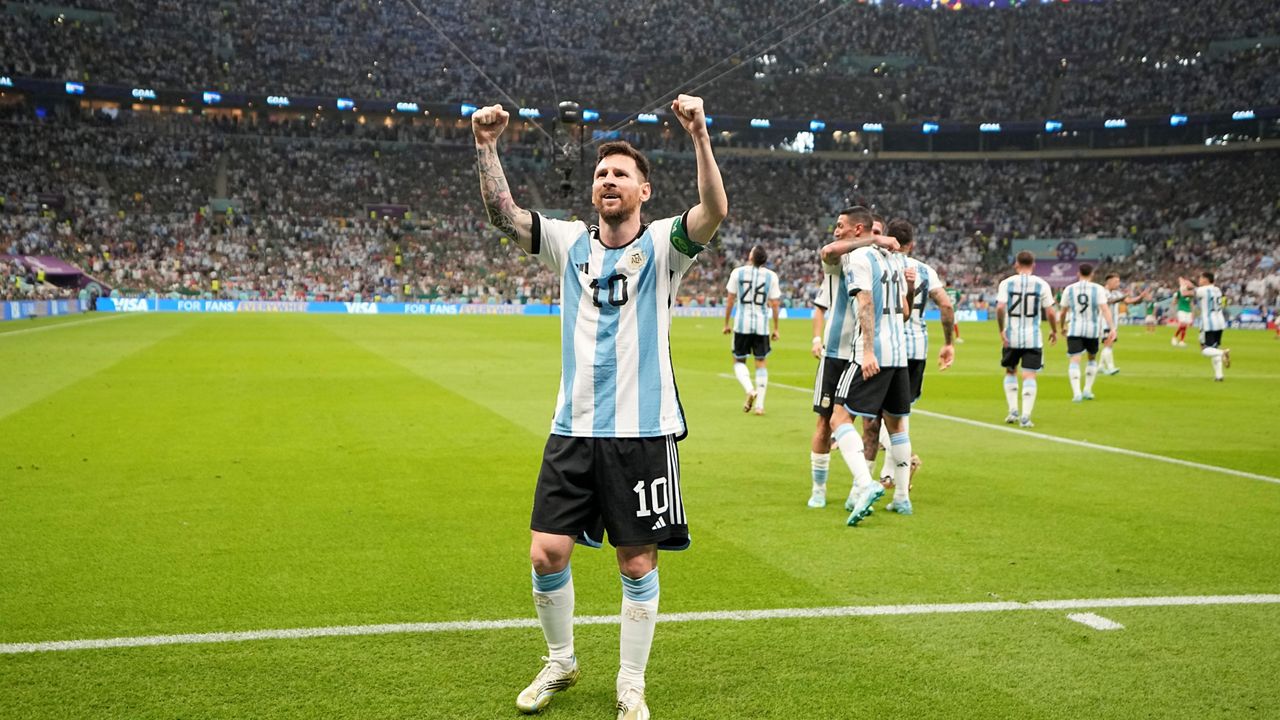
More than 20 years after that Geneva match, Messi will finally enter the fixture himself.
At 39, and potentially playing the final World Cup of his career, the timing makes the meeting even more significant. It arrives not in a friendly or group match, but in a semi-final that could take Argentina one victory away from defending the trophy they won in 2022.
How Argentina reached the semi-final
Argentina’s route through the knockout rounds has been far less controlled than the results might suggest.
The defending champions needed extra time to beat Cape Verde 3–2 in the Round of 32. They then produced one of the tournament’s most dramatic recoveries against Egypt, turning a 2–0 deficit into a 3–2 victory during the closing stages.
That comeback is covered in full in ForfeitMedia’s report on Argentina’s extraordinary escape against Egypt.
Switzerland created another serious test in the quarter-final.
Alexis Mac Allister headed Argentina in front from Messi’s corner, but Dan Ndoye equalised during a strong Swiss second half. The match changed when Breel Embolo received a second yellow card for simulation following a VAR review.
Switzerland survived the remainder of regulation with 10 players, but Argentina eventually broke through in extra time. Julián Álvarez scored in the 112th minute before Lautaro Martínez added the third deep into stoppage time.
It was Argentina’s third demanding knockout match in succession. Their ability to remain composed when matches become chaotic has kept them alive, but the accumulated physical cost could matter against England.
How England reached Atlanta
England’s quarter-final followed a similar pattern.
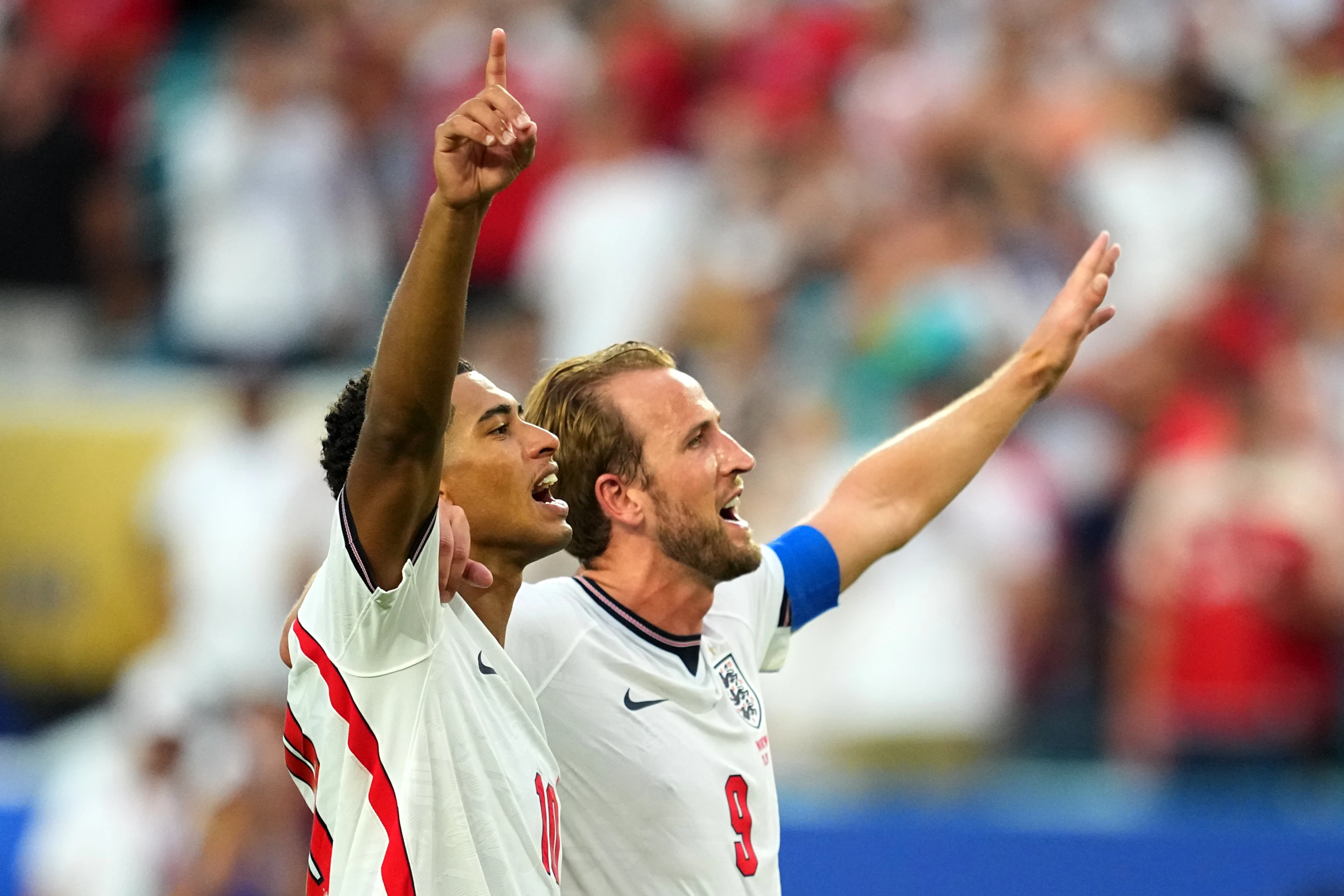
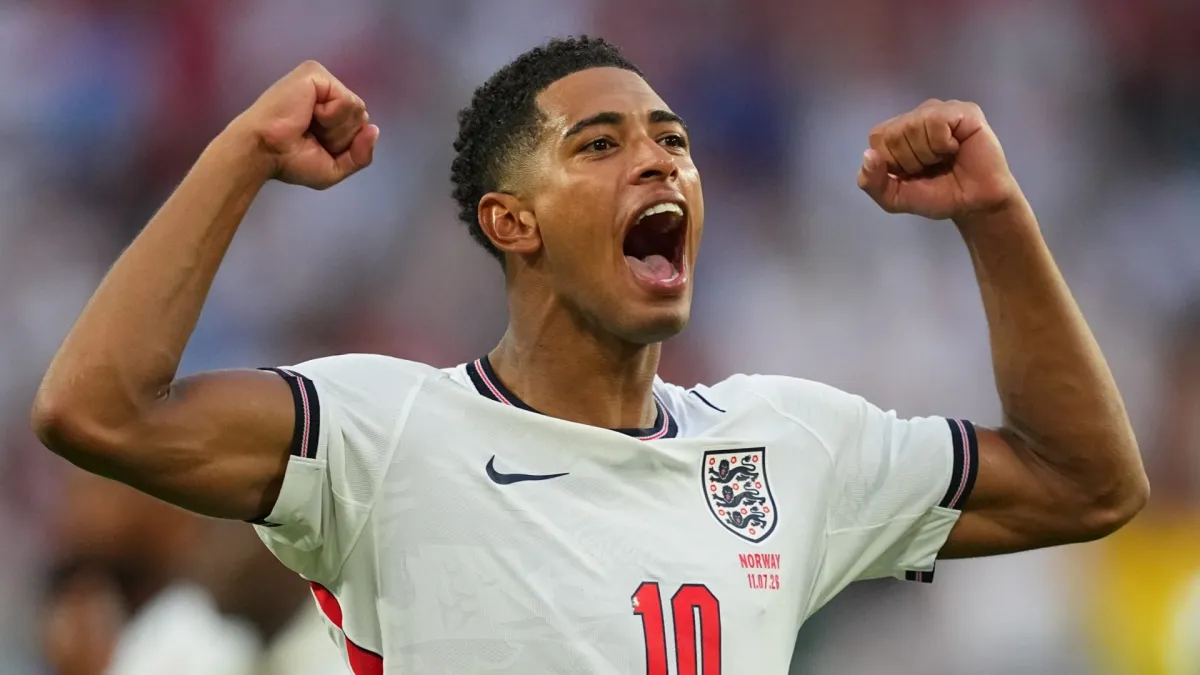
Norway took the lead through Andreas Schjelderup and repeatedly threatened England during a difficult opening half. Bellingham responded shortly before the interval, controlling Anthony Gordon’s pass before finishing across goalkeeper Ørjan Nyland.
Neither side found a winner in regulation.
Three minutes into extra time, Nyland could only parry Morgan Rogers’ long-range attempt. Bellingham reacted before the Norwegian defence and converted the rebound to send England through.
It was his second goal of the match and his sixth of the tournament.
England manager Thomas Tuchel was openly critical of parts of the performance, describing his team as too careless despite the result. Bellingham defended the group’s effort after another exhausting match in extreme conditions.
That disagreement should not obscure the central point: when England needed somebody to alter the match, Bellingham did it twice.
The semi-final now places one of this World Cup’s most decisive young players opposite the most decorated figure of Argentina’s modern era.
Messi and Bellingham carry different responsibilities
Messi and Bellingham do not play the same role, but both influence how their teams behave under pressure.
Argentina continue to shape attacks around Messi’s movement. He can remain outside the immediate action before appearing between midfield and defence, drawing multiple opponents toward him or delivering the final pass from a set piece.
He did not score against Switzerland, but his corner created Mac Allister’s opening goal.
England’s threat through Bellingham is more direct. He can advance from midfield, attack space inside the penalty area and continue pressing when the match becomes physically stretched. Both of his goals against Norway came from recognising a moment before the defenders around him.
England may have more pace and energy across the pitch. Argentina have greater experience controlling the emotional rhythm of major knockout matches.
The semi-final could be decided by which team prevents the opposing star from receiving the ball in the areas where he is most dangerous.
A rivalry built on World Cup history
Argentina and England do not meet frequently, but their matches rarely feel ordinary.
England eliminated Argentina during the 1966 World Cup on the way to winning the tournament. The quarter-final became infamous after Argentina captain Antonio Rattín was dismissed at Wembley.
Twenty years later, Diego Maradona scored both the “Hand of God” goal and the goal later celebrated as one of the greatest in World Cup history as Argentina beat England 2–1 in Mexico.
The 1998 meeting produced another defining moment. David Beckham was sent off, Michael Owen scored one of England’s most famous tournament goals and Argentina advanced through a penalty shootout.
England earned revenge in 2002 through Beckham’s penalty during the group stage.
Those matches belong to previous generations. Messi has never been part of the rivalry, despite spending his entire career surrounded by its history.
Atlanta will finally place him inside it.
The fatigue question
Neither team reached the semi-final comfortably.
Argentina have played extra time twice during the knockout rounds and were forced into an intense late comeback against Egypt. England also endured extra time against Norway after surviving a demanding Round-of-16 match against Mexico.
Recovery could therefore become as important as tactics.
Argentina coach Lionel Scaloni acknowledged the physical strain after the Switzerland victory. Messi also said the squad needed to rest and arrive in the best possible condition after another exhausting performance.
England face the same challenge. Several players were visibly drained by the end of the Norway match, and Tuchel must decide whether to preserve the structure that survived the quarter-final or introduce fresher legs.
The team that manages the opening hour most efficiently may have the greater advantage if the match again moves beyond 90 minutes.
What victory would mean for Argentina
Argentina are attempting to become the first country since Brazil in 1962 to win consecutive men’s World Cups.
Another final would also continue a remarkable period under Scaloni. Argentina have learned to survive different kinds of matches: controlled victories, penalty shootouts, late comebacks and long stretches without momentum.
Messi has already broken the World Cup scoring record during this tournament, a milestone covered in ForfeitMedia’s report on Argentina’s win over Austria.
Beating England would add a completely different chapter. It would give Messi a victory over the one major international opponent he had never faced and move Argentina within one match of retaining the trophy.
What victory would mean for England
England have not appeared in a men’s World Cup final since winning the competition in 1966.
They have moved closer during the modern era, reaching the 2018 World Cup semi-final and contesting consecutive European Championship finals. The final step has remained out of reach.
Defeating the defending champions—and eliminating Messi—would represent England’s most significant knockout victory in decades.
It would also change the way this team is remembered.
Tuchel’s side have not produced perfect performances throughout the tournament, but they have repeatedly found solutions. Bellingham’s goals, Harry Kane’s experience and the squad’s depth have carried England through increasingly difficult situations.
Against Argentina, resilience alone may not be enough. England will need greater control with the ball and fewer defensive mistakes than they showed against Norway.
England’s control around Messi
England cannot allow Messi to receive the ball freely between midfield and defence. Committing too many players toward him, however, could create space for Álvarez, Martínez or Argentina’s advancing midfielders.
Argentina’s response to Bellingham
Bellingham’s late runs are difficult to track because he often begins outside the penalty area. Argentina’s midfield must recognise those movements before he reaches the second ball or rebound.
Set pieces
Messi created Argentina’s quarter-final opener from a corner. England also carry significant aerial power. A match this evenly balanced may turn on one delivery rather than a long period of dominance.
Recovery
Both teams have played demanding knockout matches. Substitutions, tempo management and the ability to avoid another chaotic opening could become decisive.
The first goal
England and Argentina have both shown they can recover from losing positions. Even so, taking the lead would allow either side to slow the match and force its opponent into greater tactical risk.
Where the winner goes next
The winner will advance to the World Cup final on July 19 at New York New Jersey Stadium.
For Argentina, that would preserve the possibility of consecutive titles.
For England, it would end a 60-year wait for another men’s World Cup final appearance.
More tournament reports, knockout updates and match analysis are available through the ForfeitMedia World Cup 2026 hub and the site’s wider football coverage.
Bottom line
Lionel Messi has played more than two decades of international football without facing England.
That absence ends on the largest possible stage short of the final itself.
Argentina arrive as defending champions who have survived three increasingly difficult knockout matches. England arrive behind Bellingham’s goals and the belief that this generation can finally complete the journey previous teams could not.
The history surrounding the fixture is already enormous.
For Messi, however, this will be the beginning.