

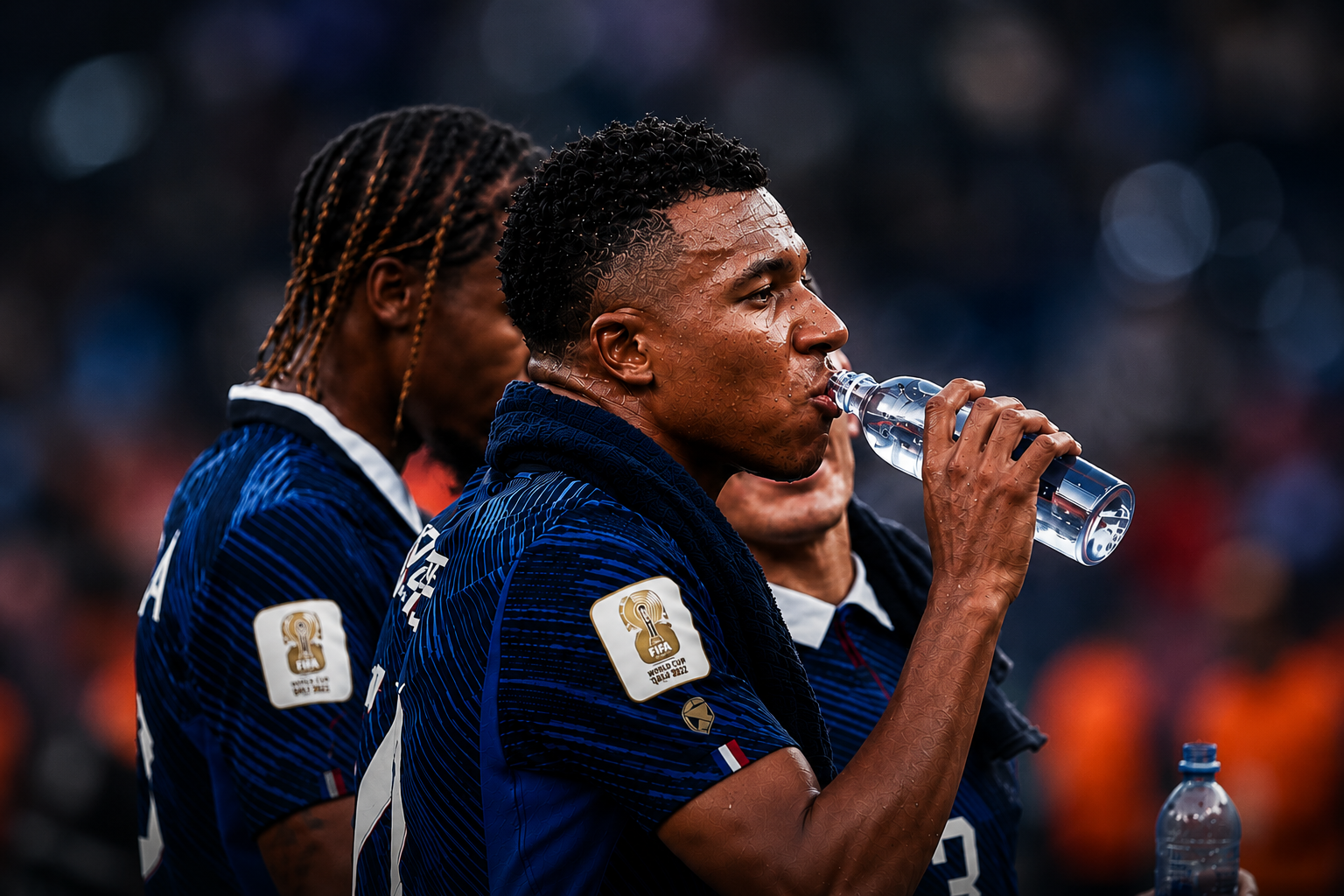
The hydration-break debate is getting louder
The 2026 World Cup was already built to feel different: more teams, more matches, more travel, and more pressure on players. But one of the biggest debates of the tournament is not about a goal, a red card, or a shock result.
It is about the hydration break.
FIFA’s rule gives players a three-minute break midway through each half, in every match. On paper, it is about player welfare. In practice, it has become one of the most divisive changes of the tournament.
Some fans see it as common sense. Players are dealing with heat, travel, packed schedules, and the physical demand of a bigger World Cup. Giving them a moment to drink, cool down, and reset does not sound controversial.
But football is also built on rhythm. A team can spend 20 minutes building pressure, only for a scheduled stoppage to pause the entire match. That is where the argument starts.
Why FIFA wants the breaks
FIFA’s side is simple: the rule is meant to protect players and keep conditions equal.
Because the tournament is spread across different cities, climates, and stadium setups, FIFA chose one consistent rule for every match instead of deciding break-by-break based only on weather.
That means the same stoppage comes whether a match is played in extreme heat, cooler conditions, or a stadium with a roof.
The logic is fairness. Every team knows when the break is coming. Every coach gets the same pause. Every player gets the same recovery window.
That matters in the biggest World Cup ever, especially with the expanded format. You can follow the wider tournament setup in the ForfeitMedia World Cup hub, where the bigger 2026 format, results, and viral moments are being tracked through the tournament.
Why people are pushing back
The criticism is not really about water.
It is about what the pause does to the game.
A hydration break gives managers time to speak to players, fix problems, slow down pressure, and reset tactics. That can completely change the feel of a match. Instead of two flowing halves, games can start to feel like four separate sections.
That is why some coaches and fans are frustrated. Football is supposed to breathe naturally. The tension builds because the clock keeps moving and the game rarely stops for long.
Now, a scheduled break can interrupt momentum right when a match is opening up.
There is also the broadcast issue. Even if FIFA says the rule is about sport and safety, many fans see the breaks as a perfect window for ads. That makes the change feel less like a welfare rule and more like another step toward turning football into a more commercial TV product.
The bigger question
This debate works because both sides have a real point.
Player safety matters. A modern World Cup is physically brutal, and heat is not something football can ignore. No serious fan wants players pushed into dangerous conditions just because tradition says the match should never stop.
But the identity of football matters too.
The sport is not built like the NFL or the NBA. Its drama comes from long stretches of uninterrupted pressure. When a scheduled pause becomes part of every match, it changes how the game feels, how coaches plan, and how fans watch.
That is why this rule is bigger than a drink break.
It is really a debate about where football is going next: protect the players at all costs, or protect the flow that makes the sport feel different.
What fans should watch next
The most interesting part is how teams adapt.
Managers may start treating the break like a tactical checkpoint. Teams under pressure may try to survive until the pause. Teams with momentum may hate seeing the rhythm broken. Broadcasters may also keep testing how much they can do during those three minutes before fans push back.
If this rule stays, it could become a normal part of future tournaments.
That would make the 2026 World Cup more than just the biggest edition ever. It could also be the tournament where football’s match rhythm started to change.
For more tournament context, read ForfeitMedia’s explainer on why the 2026 World Cup is the biggest tournament ever, and follow more football reactions in the Football topic archive.
Bottom line
The hydration-break debate is not going away.
FIFA says the rule protects players and keeps conditions fair. Critics say it breaks momentum, gives coaches extra tactical windows, and opens the door for more broadcast interruptions.
Both arguments are understandable.
But one thing is clear: the 2026 World Cup is not just changing the size of the tournament. It is changing the rhythm of the game itself.